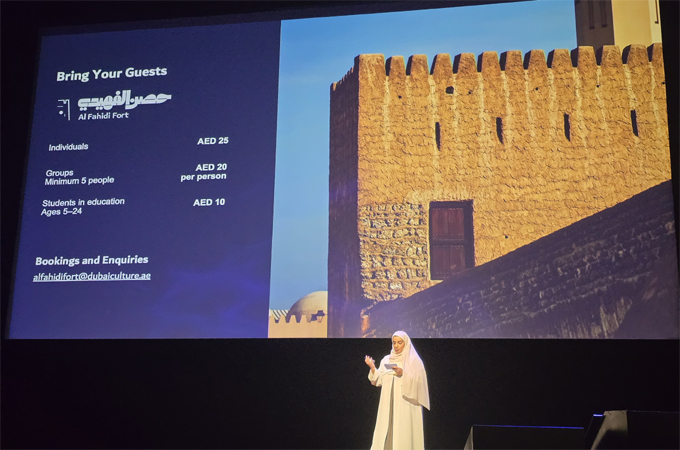
Dubai’s historic Al Fahidi Fort will reopen to the public on Thursday, November 26, following a major redevelopment that includes a new underground extension spanning 16.5 metres. The reopening was announced during the second Dubai Stakeholders City Briefing of 2026, where officials also outlined major infrastructure, transport and hospitality developments planned for the emirate in 2027.
The fort’s expansion preserves the original historic
structure above ground while introducing a new underground museum experience
designed to offer visitors greater insight into Dubai’s history and heritage.
For the first time, the museum will showcase historical
artefacts that belonged to Dubai’s former rulers, alongside a dedicated Islamic
Arms and Armour gallery. Within the original fort, visitors will also be able
to explore traditional building techniques and interact with construction
materials, including coral stone, seashells and mud, reflecting the
architectural heritage of the emirate.
Dating back approximately two centuries, Al Fahidi Fort is
located in Dubai’s historic district and serves as an important starting point
for exploring the surrounding cultural attractions. Visitors can walk or take a
traditional abra to Al Fahidi Historical Neighbourhood, Al Shindagha Museum and
nearby traditional souks.
Tickets, group bookings and multilingual guided tours are
available ahead of the reopening.
Dubai expands airport and transport capacity
The stakeholder briefing also highlighted Dubai’s long-term
infrastructure and connectivity ambitions as the city prepares for continued
population growth and rising international visitor numbers.
Dubai’s aviation expansion plans aim to increase future
airport capacity to accommodate up to 250 million passengers annually, building
on the emirate’s current capacity of nearly 100 million passengers a year.
Transport developments are also progressing across several
modes, with plans encompassing the Dubai Metro Gold and Blue lines, an Airport
Express line, Etihad Rail, autonomous driverless pods, flying taxis and the
Dubai Loop.
The projects are intended to improve connectivity between
key destinations, reduce journey times and provide additional transport options
for residents and visitors.
Hospitality sector prepares for 2027
Dubai’s hospitality industry is also undergoing significant
investment, with hotel renovations, upgrades and new brand introductions taking
place ahead of the 2027 calendar.
Six Senses The Palm marks the brand’s first entry into
Dubai, adding to the emirate’s luxury hospitality offering. Meanwhile,
refurbishment and upgrade projects have been completed or are underway at
several established properties, including Armani Hotel Dubai, InterContinental
Dubai Marina, Park Hyatt, Palace Dubai Creek Harbour and Jumeirah Burj Al Arab.
The developments reflect continued investment in Dubai’s
hotel sector as operators prepare for growing demand across leisure, business
and luxury travel segments.
Major events to drive visitor demand
Dubai’s infrastructure and hospitality investments are
supported by a year-round programme of international events expected to attract
visitors from key global markets.
The calendar includes the Dubai Shopping Festival, Gulfood,
the Dubai World Cup, Art Dubai and Arabian Travel Market, covering sectors
ranging from retail and food to sports, culture and tourism.
These events are expected to support the emirate’s position
as an international destination for business, leisure and cultural tourism.
The latest stakeholder briefing highlighted Dubai’s continued focus on combining heritage preservation with modern infrastructure investment, tourism development and hospitality expansion as the emirate prepares for its next phase of growth in 2027. -TradeArabia News Service
Send us your company’s news today and they could be featured on ABC’s Community News tommorow.