Family-owned businesses across the GCC risk losing decades of accumulated wealth and, in some cases, collapsing altogether unless they address succession planning, governance weaknesses and excessive dependence on their founders, according to business leader and author Zed Ayesh.
The warning comes following the launch of his latest book, ‘Why GCC Family Businesses Fail? The Hidden Governance and Succession Mistakes That Destroy Multi-Generational Wealth’, which examines how unresolved family dynamics, reluctance to delegate authority and the absence of professional management structures can threaten the survival of even the region's most successful enterprises.
Drawing on more than 30 years of business experience in North American and the GCC, Ayesh argues that the greatest danger to family-owned enterprises may not come from economic downturns or market competition, but from within the organisations themselves, particularly when founders fail to prepare the next generation to take over.
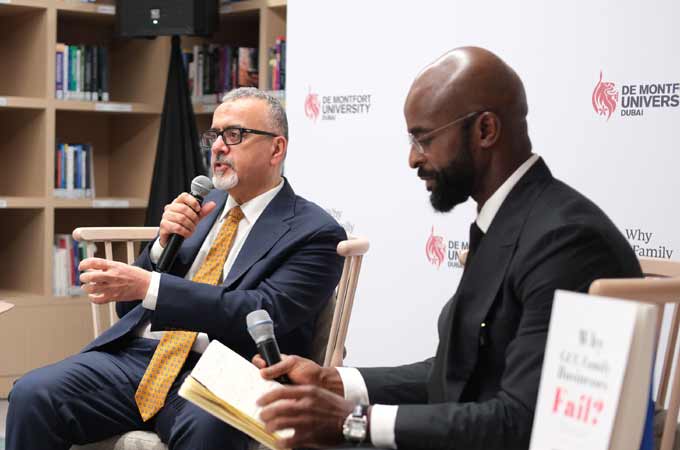
The book, officially launched at De Montfort University, challenges the assumption that commercial success guarantees long-term continuity. It explores how family businesses that have spent decades building their reputation, assets and market position can jeopardise their future by overlooking fundamental weaknesses in leadership and decision-making.
One of the central challenges identified by Ayesh is the concentration of authority in the hands of founders who remain closely involved in daily operations, often without establishing clear succession plans or preparing capable leaders to assume responsibility.
“Corporate culture becomes what leadership tolerates,” Ayesh said, emphasising that personal relationships, family traditions and informal decision-making cannot replace professional governance and accountability.
Ayesh also challenges the assumption that family members should automatically inherit executive responsibilities, arguing that leadership positions must be based on competence, experience and the long-term interests of the organisation rather than family hierarchy.
“The family should monitor the operation, not run it,” he pointed out.
According to Ayesh, family ownership and professional management are not mutually exclusive. On the contrary, separating ownership from operational responsibilities can help protect family wealth, reduce internal conflicts and ensure that businesses remain competitive as they transition from one generation to another.
The book examines several critical mistakes that can undermine family enterprises, including founders' reluctance to relinquish control, unclear responsibilities among family members, inadequate succession planning and the tendency to prioritise personal loyalties over professional qualifications.
These challenges carry particular significance across the GCC, where family owned enterprises have played an important role in shaping the region's commercial landscape and private sector development. As businesses established by earlier generations prepare for leadership transitions, decisions made today could determine whether their legacy continues or gradually disappears.
The book's official launch brought together family business leaders, representatives of family offices, academics, students and business professionals for a discussion on the future of family-owned enterprises.
The session featured a conversation between Ayesh and Dr Raymond Lihe, Programme Leader and Associate Professor in Strategy and Business Analysis at De Montfort University Dubai, who moderated the discussion and was among the book's pre-publication reviewers. -TradeArabia News Service
Send us your company’s news today and they could be featured on ABC’s Community News tommorow.