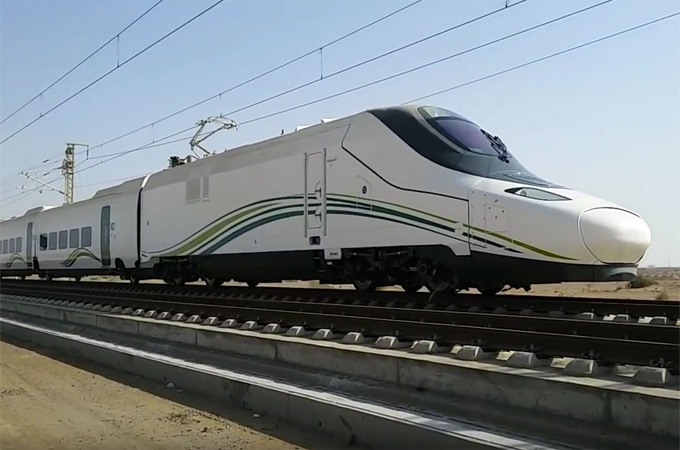
Saudi Arabia Railways (SAR) avoided more than 364,800 tonnes of carbon dioxide emissions and saved over 139.4 million litres of fuel in 2025, highlighting the growing contribution of rail transport to the Kingdom’s sustainability and emissions-reduction objectives.
The savings resulted from shifting passenger and freight
transport from roads to rail, reducing fuel consumption and the number of
vehicles required to move people and goods across the country.
Operating a network spanning more than 5,500 kilometres, SAR
plays a key role in supporting Saudi Arabia’s Vision 2030 and National
Transport and Logistics Strategy through expanded passenger services, freight
operations and connections between cities, ports and industrial centres.
Freight and mineral transportation were among the main
contributors to the environmental savings. SAR transported more than 30 million
tonnes of freight in 2025, eliminating the need for approximately two million
vehicle trips on Saudi roads.
Its rail network connects production facilities with ports
and industrial zones, reducing reliance on long-distance trucking while
supporting the movement of goods and raw materials.
Passenger services also contributed to the results, with SAR
transporting more than 14.6 million passengers during the year, including
travellers between cities and pilgrims.
The Haramain High-Speed Railway and Al-Mashaaer
Al-Mugaddassah Metro Line operate entirely on electricity, avoiding direct fuel
combustion by trains.
SAR is also expanding the use of renewable energy across its
supporting infrastructure, with more than 50 per cent of its signalling and
communications systems powered by solar energy.
The systems help maintain operations in remote locations
while reducing dependence on conventional electricity sources.
Beyond energy savings, the company recycled 10,216 tonnes of
waste from infrastructure projects and operational activities in 2025,
including carbon steel and aluminium. Recovered materials were returned to
local industrial value chains to support resource efficiency and circular
economy practices.
Water conservation and environmental management remain
additional priorities. SAR treats wastewater at Northern Line stations and
facilities and reuses all treated water for irrigating green spaces.
The company has also planted more than 53,000 trees and
shrubs across its sites.
Its environmental management system complies with the ISO
14001:2015 standard.
Operational safety and workforce development form part of
SAR’s broader sustainability strategy.
The company reported reductions of 75 per cent in
intersection accidents, 62.5 per cent in injuries, 63 per cent in near-miss
incidents and 68 per cent in collisions at yards and workshops.
Meanwhile, SAR's workforce localisation rate reached 89 per
cent in 2025, with 104,668 training hours delivered to 3,129 employees.
Local content stood at 67.35 per cent, exceeding the company’s target by more than seven per cent. -OGN/TradeArabia News Service
Send us your company’s news today and they could be featured on ABC’s Community News tommorow.