Saudi Arabia is accelerating its housing, transport and urban development programmes, with more than 63,000 Saudi families becoming first-time homeowners in the first half of 2026 and Riyadh advancing a wide range of infrastructure projects aimed at improving mobility, expanding residential options and supporting the capital’s long-term growth.
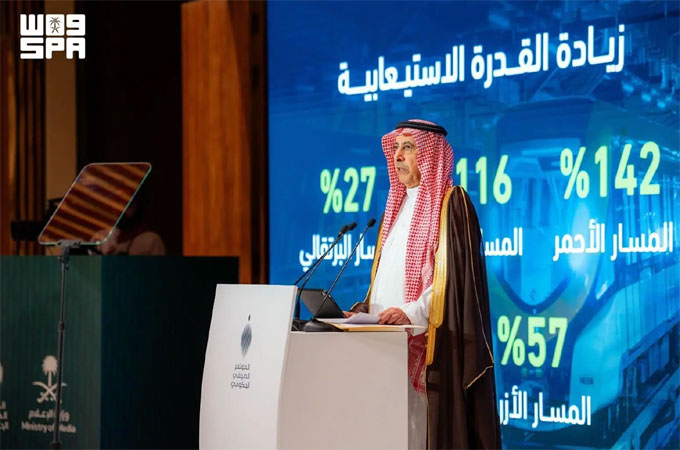
The progress was outlined at the 37th government press conference, organised by the Ministry of Media in Riyadh on Monday, where Minister of Media Salman bin Yousef Al-Dossary highlighted the government’s development priorities and Minister of State, Cabinet Member and CEO of the Royal Commission for Riyadh City (RCRC), Eng. Ibrahim bin Mohammed Al-Sultan, detailed the capital’s expanding portfolio of construction and infrastructure projects.
The updates covered housing affordability, railway and metro expansion, major road corridors, parks and environmental rehabilitation, as well as investments in electricity storage and water-related industries.
The announcements reflect the government’s stated priority of placing citizens at the centre of development, while strengthening the infrastructure required to accommodate Riyadh’s growing population, economic activity and investment.
Housing remains a central development priority
More than 63,000 Saudi families became first-time homeowners during the first half of 2026, underscoring the continued expansion of homeownership opportunities under the Kingdom’s housing and real estate programmes, Al-Dossary said.
He stressed that housing remained a key pillar of family stability and that government policies were intended to broaden residential options, facilitate homeownership and increase the supply of properties available to citizens.
The government is continuing to implement real estate reforms, including the White Land and Vacant Property Fees Law, which aims to encourage the development of unused land, increase housing supply and improve the efficiency of land use in urban areas.
The measures are particularly significant for Riyadh, where population growth, investment and the expansion of economic activity have increased the importance of ensuring that residential supply keeps pace with demand.
Al-Sultan said directives issued by Crown Prince and Prime Minister Mohammed bin Salman bin Abdulaziz Al Saud to improve the balance of the real estate market were continuing to be implemented through measures designed to increase supply, expand housing choices for citizens and stimulate real estate development and investment.
Under the programme, citizens are to be provided with between 10,000 and 40,000 residential plots annually over five years, at prices not exceeding SAR1,500 per square metre.
During the first year, more than 6.3 million square metres of land, comprising 10,024 residential plots, were allocated. The handover of plots to the first group of beneficiaries is scheduled to begin alongside preparatory infrastructure works in five fully serviced residential developments.
The initiative combines land allocation with infrastructure provision, an approach intended to help beneficiaries access residential plots while supporting the development of new neighbourhoods.
The housing programme forms part of a broader policy agenda focused on making homeownership more accessible, improving family stability and supporting the continued development of Riyadh and other Saudi cities.
Riyadh expands its road and construction programme
Riyadh is entering a new phase of urban development, with the RCRC overseeing major projects covering road infrastructure, public transport, green spaces and the wider urban environment.
Al-Sultan said the commission’s role includes guiding urban and economic planning, directing growth and investment, developing infrastructure and public services, and overseeing the implementation of major projects under the leadership of the Crown Prince, who chairs the RCRC Board of Directors.
A central component of the capital’s construction programme is the development of ring roads and main transport corridors. The programme targets improvements across approximately 700 kilometres of major roads and more than 330 key intersections.
The works include the construction of more than 300 bridges and 80 tunnels to improve traffic flow, strengthen connections between districts and increase the capacity of Riyadh’s road network.
Several major projects have reached advanced stages of completion.
The road project connecting Taif Road to Qiddiya is 81% complete, while the Second Southern Ring Road has reached 45% completion. The two bridges being constructed parallel to the Suspension Bridge are 42% complete.
The main piers of the first bridge have been completed, and installation work has begun. Preparatory work is also progressing on the second bridge and the interchange connecting it to the Western Ring Road.
Work is continuing along the Al-Thumamah Road corridor, extending from King Khalid Road in the west to Sheikh Jaber Al-Ahmad Al-Sabah Road in the east. The project includes improvements to 13 major intersections, alongside the construction of 10 tunnels and 17 bridges.
Construction is also continuing along Takhassusi Road and at several bridges and intersections associated with King Salman Road, with the aim of improving connectivity across the capital.
The Al-Thumamah Road bridge at its intersection with Prince Mohammed bin Salman Road has already been completed and opened to traffic. Further openings are expected in the coming period, including sections of Taif Road in the Laban district leading towards Qiddiya, bridges around King Abdullah Financial District and additional sections of the Al-Thumamah Road corridor.
Alongside physical construction, the commission is implementing traffic-management improvements at 26 critical locations, upgrading traffic-signal technology at 720 intersections and connecting them to a unified control room.
Work has also begun at 80 sites under the first phase of a programme designed to improve vehicle movement on major roads.
Together, these initiatives are intended to increase the efficiency of Riyadh’s transport network as the capital expands and new residential, commercial and investment districts develop.
Riyadh Metro expansion gathers pace
Public transport is becoming an increasingly important part of Riyadh’s urban development strategy, with the metro and bus network recording substantial passenger use since operations began.
Al-Sultan said the capital’s public transport network was approaching 500 million passenger journeys, including more than 300 million on Riyadh Metro. Trips made by school and university students have exceeded 20 million.
An RCRC survey found that 83% of metro passengers use the service daily, indicating growing reliance on the network for commuting to work and school and travelling for other economic activities.
To accommodate rising demand, the commission has signed contracts to purchase 94 additional trains, expanding the Riyadh Metro fleet from 183 to 277 trains.
The expansion is expected to increase passenger capacity substantially across three lines.
Daily capacity on the Blue Line will rise from approximately 340,000 to 533,000 passengers, while the Red Line’s capacity will increase from 154,000 to 370,000. The Yellow Line is expected to expand from 133,000 to more than 288,000 passengers a day.
The commission is also extending the Red Line from King Saud University towards Diriyah, adding five stations. Two stations will serve the university and its medical city, while the remaining three will serve Diriyah.
The extension is intended to strengthen connections between major educational and healthcare facilities, established urban districts and one of the capital’s significant development areas.
The additional trains and planned line extension form part of the wider effort to expand public transport capacity and provide alternatives to private vehicles as Riyadh’s population and daily travel demand increase.
Saudi Arabia Railways expands intercity passenger capacity
Beyond the capital, Saudi Arabia is investing in its national railway network to expand passenger services and support the movement of goods and minerals.
Saudi Arabia Railways has signed an agreement to finance the purchase of 10 new passenger trains, a move expected to expand intercity services and increase passenger capacity.
The rail network carried more than 38 million passengers in the second quarter of 2026, according to figures presented by Al-Dossary.
During the same period, the network transported nearly 3.7 million tonnes of minerals and goods, in addition to more than 47,000 twenty-foot equivalent units (TEUs) of containerised cargo.
The figures highlight the railway sector’s role in supporting passenger mobility and freight transportation, including the movement of industrial commodities and minerals.
The purchase of additional passenger trains is expected to strengthen intercity connectivity, while the wider development of rail services supports the Kingdom’s efforts to improve transport efficiency and facilitate economic activity between regions.
King Salman Park and Green Riyadh advance
Riyadh’s development programme extends beyond transport and housing to include major parks, public spaces and environmental rehabilitation projects intended to improve the urban environment and quality of life.
King Salman Park, covering more than 17 million square metres in the heart of the capital, remains one of the flagship projects. Large sections of the first-phase infrastructure have been completed, while afforestation and the development of public spaces and facilities are continuing.
Under the Green Riyadh programme, more than 4.5 million trees have been planted, with planting extending along 235 kilometres of roads and transport corridors. Approximately five million square metres of valleys and their tributaries have also been rehabilitated.
The commission is developing 14 major parks covering more than 12 million square metres.
King Abdulaziz Park is 50% complete, while Al-Urubah Park has reached 55% completion. Major parks in the eastern Riyadh districts of Al-Munsiyah, Al-Qadisiyah and Al-Rimal are 85% complete.
Work is also progressing on more than 250 neighbourhood parks, with over 1,500 additional parks in preparation. The programme is intended to bring green spaces closer to residents and expand access to recreational areas across the capital.
Energy storage investment strengthens power-system reliability
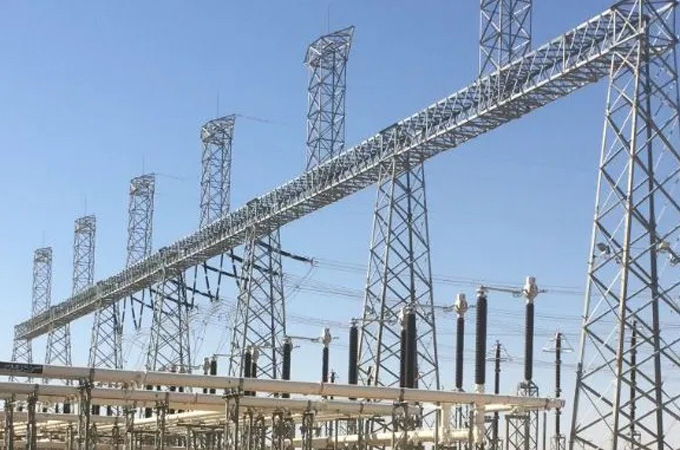
The Kingdom is also advancing investments in electricity infrastructure to improve power-system reliability and support the expansion of renewable energy.
The Saudi Power Procurement Company has signed four agreements for battery energy storage projects with a combined investment value of nearly SAR4.5 billion and total capacity of 2,000 megawatts, Al-Dossary said.
The projects are intended to enhance the reliability and efficiency of the electricity system while supporting the integration of renewable energy into the national power mix.
Battery storage can help balance electricity supply and demand by storing energy when it is available and making it accessible when required, supporting more flexible operation of the power system.
The agreements form part of the Kingdom’s wider investment in energy infrastructure and the development of capabilities needed to support its changing energy mix.
Separately, exploration at the Jabal Sayid project has identified estimated resources of approximately 114 million tonnes of ore containing high concentrations of rare earth elements, alongside promising indications of uranium.
Send us your company’s news today and they could be featured on ABC’s Community News tommorow.