The US-Iran war has entered a dangerous new phase in the Gulf, with American forces destroying five Iranian oil tankers and Tehran retaliating with missile strikes on a US-linked military base in Jordan and attacks on vessels in the Strait of Hormuz.
The escalation has now extended directly to the commercial shipping networks, after Iran's Islamic Revolutionary Guard Corps warned crews aboard oil tankers in ports in the Bahrain and Kuwait to leave their vessels, saying the ships would be targeted.
The threat raises the prospect of attacks on commercial shipping far beyond Iranian waters and could further disrupt one of the world's most important energy corridors.
The latest confrontation began on Tuesday when US Central Command said its forces destroyed five Iranian crude-oil carriers after the Islamic Revolutionary Guard Corps attempted twice in two days to strike a US Navy warship with ballistic missiles. The American warship evaded the attacks and continued patrolling regional waters, with no US casualties reported.
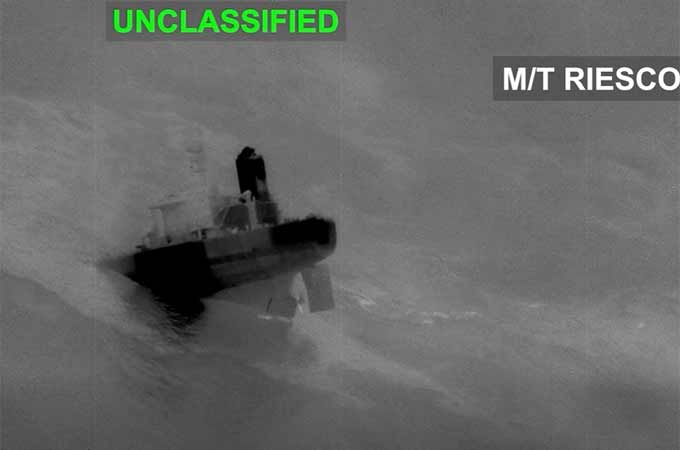
The vessels destroyed by the US were the Kaviz, Charminar, Horizon 1 and Riesco in the Gulf of Oman, and the Derya near Iran's Kharg Island in the Arabian Gulf, according to CENTCOM. US forces said the crews were ordered to abandon the ships before the vessels were struck and rendered inoperable.
The strikes followed a similar US operation on September 5, when three Iranian crude carriers were destroyed after attacks by the IRGC on a US aircraft carrier and a guided-missile destroyer, according to CENTCOM. Washington says the Iranian tankers form part of a multibillion-dollar shadow network used to finance the IRGC and its regional proxies.
Iran retaliates
Iran responded with a broader series of attacks on Wednesday.
The IRGC said it launched ballistic missiles against the Al Azraq military base in Jordan, which hosts US forces, and claimed to have inflicted heavy damage. Jordan said its air defences intercepted 18 of 20 Iranian ballistic missiles, while the remaining two landed in unpopulated areas. No casualties were reported, and a US official said American personnel were safe.
The IRGC also claimed attacks against 10 ships attempting to cross what it described as a "prohibited and unsafe" area of the Strait of Hormuz. The group said two of the vessels were US ships and eight were oil tankers.
Iranian claims of damage to US naval vessels could not be independently verified, while Washington has said Iranian attempts to hit its warships have failed.
The widening maritime confrontation comes as the United States intensifies its effort to control traffic around the Strait of Hormuz, escort commercial vessels through a designated route and maintain pressure on Iranian oil exports. At the same time, Iran has sought to make the waterway increasingly difficult and risky for shipping.
Earlier, Iran's armed forces chief, Ali Abdollahi, said Tehran would retaliate against US military installations across the region if Iranian tankers were attacked.
Washington, meanwhile, has made clear that it intends to continue striking Iranian shipping.
US Secretary of State Marco Rubio said the American response would be repeated whenever Iran attacked US naval forces. "Iran continues to try to hit US naval ships, and for every time they do that, or try to do that, they're going to lose tankers," Rubio told reporters during a visit to Colombia.
Hormuz traffic falls sharply
The escalation is already affecting shipping through the Strait of Hormuz, through which a substantial share of the world's seaborne oil and gas normally passes.
Only six commodity vessels crossed the strait on Tuesday, according to preliminary Kpler data reported by Reuters, down from nine the previous day and well below the 10-day average of about 12 vessels. Five were entering and only one was exiting.
Traffic through the Bab el-Mandeb Strait, another critical maritime chokepoint, was also below its recent average, with 25 commodity vessels recorded on Tuesday compared with a 10-day average of about 27.
The declining traffic reflects the growing reluctance of shipowners and crews to enter waters where commercial vessels could become collateral targets in the US-Iran confrontation.
Oil prices approach $100
The growing threat to Gulf shipping has also rapidly increased the risk premium in global oil markets. Brent crude approached $98 a barrel on Wednesday, while Murban crude rose above $110, as traders assessed the possibility of further disruption to tanker traffic through Hormuz.
Send us your company’s news today and they could be featured on ABC’s Community News tommorow.