The US Energy Information Administration has sharply raised its forecast for oil prices this year, warning that severe restrictions on shipping through the Strait of Hormuz are likely to persist through August despite President Donald Trump's repeated assertions that the strategic waterway is open.
Meanwhile, the latest attacks on commercial shipping have added to those concerns. In the Bab al-Mandeb Strait, Yemen's Iran-aligned Houthis have been accused of attacking a commercial vessel in a strike that killed crew members.
The EIA raised its forecast for average Brent crude prices in 2026 to about $87 a barrel, from $82 in its previous monthly outlook, as the prolonged disruption to oil shipments threatens to tighten global inventories and keep crude prices elevated.
The agency's latest Short-Term Energy Outlook assumes that the "severe constraints" on transit through the Strait of Hormuz will continue through August. It also expects the disruption to leave about 600,000 barrels per day of Middle Eastern oil production offline through the end of 2027, even though most regional production is expected to return to near pre-conflict levels early next year.
The forecast comes as oil prices continue to rise on mounting doubts that the US-Iran conflict will end quickly.
Brent crude rose 1.4% on Tuesday to settle at $88.91 a barrel, while US West Texas Intermediate gained 1.3% to $83.20. On Wednesday, Brent was trading around $89.63 and WTI around $83.91 as concerns over the security of Middle Eastern shipping continued to support prices.
The EIA's revised outlook is significant because it effectively challenges the assumption that the world's most important oil shipping chokepoint will quickly return to normal.
Hormuz remains effectively restricted
Trump has repeatedly said that the Strait of Hormuz is open and under US control.
He told reporters on Monday that the United States had "total control" of the waterway and warned Iran that it would face overwhelming military retaliation if it attempted further action.
But commercial shipping figures tell a very different story.
Only six vessels crossed the Strait of Hormuz on Monday, according to maritime tracking data cited by Reuters, compared with roughly 130 to 140 vessels a day before the war. The six included four commodity vessels, two of which were empty oil-product tankers, while two vessels exited the waterway carrying liquefied petroleum gas and residual fuels.
That collapse in traffic is central to the EIA's more cautious oil outlook.
The issue is not simply whether ships can physically navigate the strait. For oil markets, the critical question is whether commercial operators consider the waterway sufficiently safe and predictable to resume normal operations.
At present, they clearly do not.
Attacks reinforce EIA's warning
The latest attacks on commercial shipping have added to those concerns.
In the Bab al-Mandeb Strait, Yemen's Iran-aligned Houthis have been accused of attacking a commercial vessel in a strike that killed crew members.
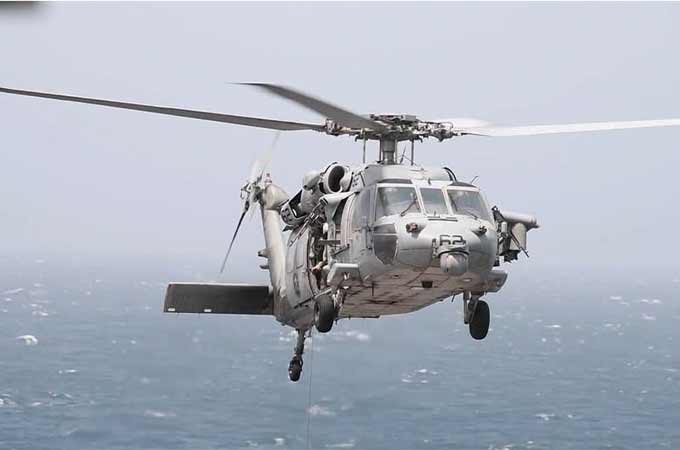
Separately, the US military said it fired two Hellfire missiles from an MH-60 helicopter at the Panama-flagged M/V Vela Nova after the vessel allegedly ignored warnings and attempted to sail towards an Iranian port.
US Central Command said the missiles struck the ship's engine room and disabled its steering system, preventing it from continuing towards Iran.
The incidents have reinforced fears among shipowners and insurers that commercial vessels remain exposed even if Washington considers the waterway to be open.
Oil market facing prolonged supply squeeze
The EIA expects the continued restrictions to reduce petroleum flows through Hormuz and draw down global oil inventories more rapidly in the coming months.
The Strait normally carries around one-fifth of global oil supplies, making any sustained disruption potentially significant for international energy markets.
The agency now expects Brent to average about $85 a barrel in the third quarter of 2026, before falling as inventories rebuild and Middle Eastern production recovers. Its baseline scenario puts Brent at an average of about $69 a barrel in 2027.
But that projected decline depends heavily on the assumption that the disruption eventually eases.
The EIA has already revised its estimates because the recovery in oil flows has been slower than previously expected. Its latest forecast also indicates that some regional production losses could persist well beyond the immediate shipping disruption.
Global oil production is expected to average around 100.8 million barrels per day in 2026, about 1% below the agency's previous forecast, while demand is projected at around 104 million bpd. That imbalance is another reason the agency expects inventories to tighten and prices to remain elevated.
Diplomatic uncertainty keeps risk premium high
The oil-market outlook is being complicated by the lack of agreement between Washington and Tehran over reopening the waterway.
Iran has indicated that the Strait of Hormuz will remain closed unless the United States accepts its conditions, including concessions relating to the conflict and sanctions.
Trump, meanwhile, has introduced additional demands, including compensation from Iran for what he describes as past actions.
The widening gap between the two positions has reduced expectations of a quick resolution and helped push crude prices higher.
The EIA's forecast therefore provides a more tangible measure of the economic consequences of the continuing standoff than the conflicting political statements from Washington and Tehran.
Send us your company’s news today and they could be featured on ABC’s Community News tommorow.