
Saudi Arabia’s non-oil economy is entering a new phase. After a decade of rapid expansion driven by reform and public investment, future growth is expected to be shaped less by scale and more by competitiveness, productivity and export capability.
PwC Middle East’s latest Saudi Economy Watch, The next phase of economic diversification, examines how the drivers of future growth are changing as fiscal conditions tighten and productivity constraints become more binding.
Non-oil sectors now account for around 56% of Saudi Arabia’s SAR4.7 trillion economy, reflecting the progress made in broadening the kingdom’s economic base since the launch of Vision 2030, says the study.
Non-oil linked to oil market
This expansion has been supported by activity across sectors such as retail, tourism, hospitality and services. At the same time, analysis by PwC Middle East shows that non-oil growth remains closely linked to oil market conditions, with a 10% change in oil prices associated with a 0.5% change in non-oil GDP.
The report suggests that a sustained 10% decline in oil prices could reduce cumulative non-oil GDP by around SAR430 billion (2024 constant prices) over three years, relative to projected growth.
By contrast, modelling indicates that shifting towards productivity- and export-oriented growth could raise non-oil GDP by an estimated 5.5% by 2035, strengthening resilience in the kingdom, it says.
As fiscal conditions evolve, the composition of investment is becoming more important than its volume. The strength of future non-oil growth will depend increasingly on activities that raise productivity, build export capability and attract private investment able to sustain growth with less reliance on oil revenues.
Quality of investment key
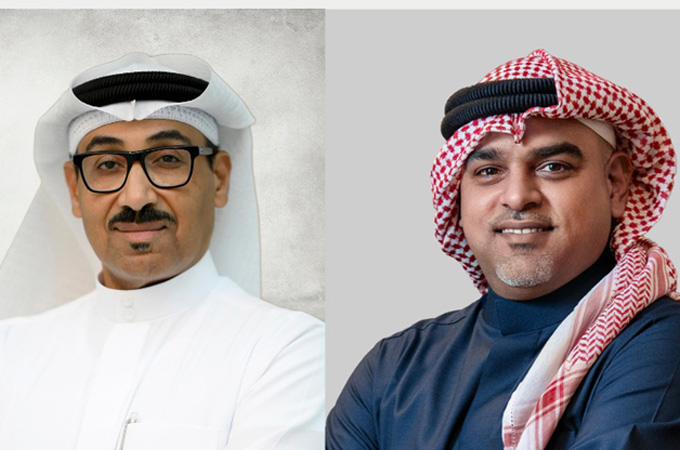
Riyadh AlNajjar, Middle East Chairman of the Board and KSA Senior Partner at PwC Middle East, said: “Saudi Arabia has made decisive progress in expanding non-oil activity. The next phase of diversification will be shaped less by scale and more by the quality of investment, with greater focus on productive capabilities, private sector participation and activities that can compete in external markets.”
The report outlines an export-oriented growth framework to guide investment decisions as the non-oil economy matures. Rather than prioritising output expansion alone, the framework emphasises tradable competitiveness, capability development, domestic value creation, skills intensity and private sector participation. Modelling suggests that applying this framework could raise total factor productivity by around 10% by 2035, supporting an estimated 5.5% increase in non-oil GDP over the same period.
For Saudi Arabia, these themes are relevant across manufacturing, logistics, tourism, technology-enabled industries and higher-value services. As these sectors continue to develop, export-facing activity, capability building and private-sector participation will play a larger role in supporting durable growth, higher-quality jobs and stronger integration into regional and global markets.
Faisal Alsarraj, KSA Deputy Country Leader at PwC Middle East, commented: "Reducing exposure to oil cycles is ultimately about building businesses that can compete beyond the domestic market. Investment that strengthens supply chains, raises productivity and attracts private capital creates resilience that public spending alone cannot deliver.”
Looking ahead, the findings point to a clear evolution in Saudi Arabia’s growth model. Greater emphasis on disciplined capital allocation, export capability and private-sector-led value creation will be central to reducing the influence of oil cycles on non-oil performance and underpinning a more resilient and self-sustaining economy, the study said. - TradeArabia News Service
Send us your company’s news today and they could be featured on ABC’s Community News tommorow.