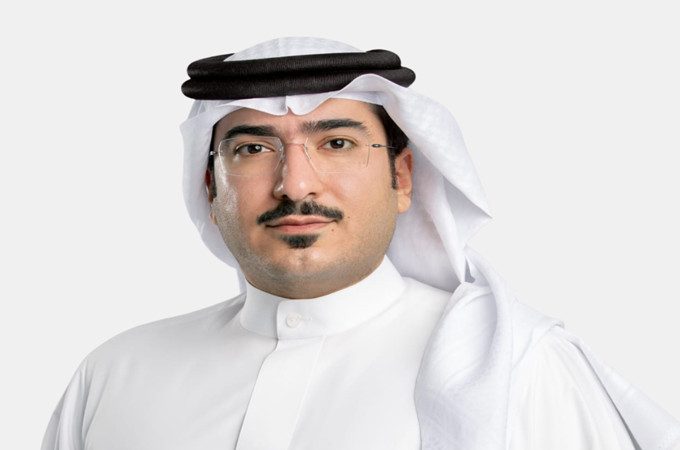
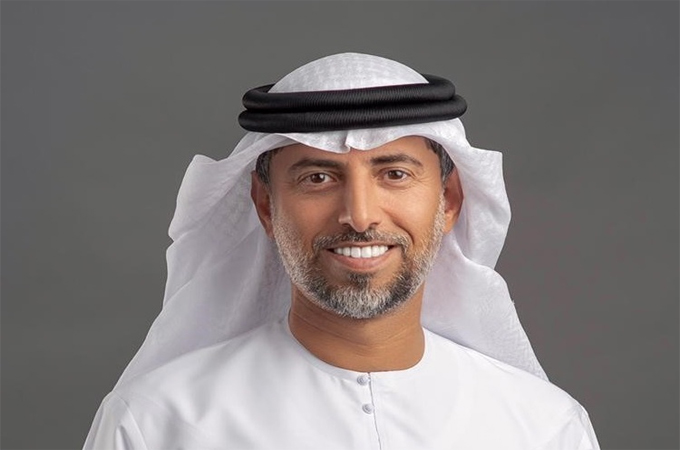
Suhail Al Mazrouei, Minister of Energy and Infrastructure, affirmed that the Abu Dhabi International Petroleum Exhibition and Conference (ADIPEC) continues to grow and evolve in both the quality of participation and the diversity of discussions, with artificial intelligence (AI) and advanced technology emerging as central themes.
The event, he said,
showcases innovative technological solutions that reduce costs and enhance
efficiency across the global energy sector.
In statements to the
Emirates News Agency (WAM), Al Mazrouei said that the UAE ranks among the top
countries worldwide in applying AI technologies, citing a recent Microsoft
study that placed the UAE first globally in AI adoption at 59.4 per cent,
compared to the global average of 15 pe rcent.
He noted that this
growth reflects the rapid increase in the number of data centres globally,
which require far more energy capacity than currently available. This, he
added, introduces new variables into global energy strategies, particularly
amid falling costs of wind energy production and battery storage, opening the
way for greater expansion of renewable electricity generation.
On global oil and gas
demand forecasts for the coming year, Al Mazrouei explained that participants
at ADIPEC 2025 highlighted a fourfold increase in global electricity demand to
meet the needs of large-scale data centres being developed worldwide, especially
in the United States, China and other countries. He noted that the UAE is part
of this global race as one of the leading nations in adopting AI technologies.
He added that mega
data centres require vast amounts of electricity and cooling, which calls for
diversified energy sources to meet their needs, including fossil fuels. He
predicted that oil and gas demand would continue to grow in the medium and long
term to support these facilities, an opportunity the UAE recognised early under
the guidance of its wise leadership by boosting investment across all forms of
energy.
As an active member of
OPEC and OPEC+, Al Mazrouei said that the UAE continues to contribute to market
studies and coordination among member states amid expectations of increased
future demand for all types of energy, both conventional and renewable.
He underlined that the
UAE gives strong attention to improving energy efficiency in buildings,
launching national initiatives and projects across federal buildings in
cooperation with local authorities to maximise the use of modern technologies.
These efforts, he said, aim to achieve savings of up to 30 per cent in
consumption and form a key component of the updated National Energy Strategy.
Al Mazrouei stated
that the UAE has made significant progress in implementing the UAE Energy
Strategy 2050, reflecting its firm commitment to achieving climate neutrality
and ensuring energy security and sustainability in line with the “We the UAE
2031” vision and the leadership’s forward-looking approach.
He noted that the UAE
has successfully built an integrated energy system based on diversification,
efficiency and sustainability, increasing the share of clean energy in the
national electricity mix to over 30 per cent in 2024 and expanding total
installed renewable capacity to more than 6.8 gigawatts. Projects currently
under implementation will raise total capacity to 22 gigawatts by 2031.
Al Mazrouei added that
solar, nuclear and low-emission hydrogen projects have become core pillars of
the national energy system, enabling the UAE to achieve a balanced approach
between economic growth and environmental protection. The scale of national investment
in clean and renewable energy, he said, reflects the UAE’s confidence in the
sector as a key driver of sustainable development and a promising field for
future partnerships and investments.
He pointed out that
the UAE Energy Strategy 2050 underwent a comprehensive update in 2024 to align
with global energy transitions and raise national ambition. The updated
strategy now targets 35 per cent of electricity generation from clean sources
by 2031, up from 32 per cent, and aims to more than triple renewable energy
output by 2031 compared to 2022 levels.
Al Mazrouei explained
that the updated strategy also integrates the UAE National Hydrogen Strategy
2050 into the overall energy planning framework, making hydrogen a central
component of the country’s path to climate neutrality. The plan focuses on
enhancing regional and international electricity interconnection, expanding
investment in energy storage and smart grids, and consolidating the UAE’s
position as a regional and global leader in clean energy.
He reaffirmed that the
UAE is moving confidently towards a sustainable energy future based on
innovation, international cooperation and a balanced approach between economic
growth and environmental preservation, embodying its vision to be a global
model for smart and sustainable energy transition.
In a related context,
Al Mazrouei participated in the ministerial roundtable on "enhancing
energy security and resilience through diversification” during ADIPEC 2025. He
outlined the key pillars of the UAE Energy Strategy 2050: diversification, reserve
flexibility, affordability and resilience, which support the country’s
long-term vision for sustainable development and reliable energy supply through
integrated planning, regional cooperation and innovation.
Al Mazrouei stressed
that the UAE continues to strengthen its role as a key player in the global
energy landscape through a balanced approach that combines energy security with
accelerating the clean energy transition, reaffirming the country’s commitment
to achieving climate neutrality by 2050.
He concluded that
carbon reduction and energy security are complementary goals, not conflicting
ones. “The UAE’s Energy Strategy 2050 demonstrates that decarbonisation
enhances energy security by improving system efficiency, sustainability and
resilience, laying the foundations for a low-carbon and energy-secure future.
The UAE’s diversified energy mix: comprising oil, natural gas, renewables and
nuclear power, plays a strategic and integrated role, with renewable energy
investment serving as a cornerstone of the strategy,” he said.
Al Mazrouei emphasised
that innovation and international cooperation are key pillars of the UAE’s
ambition to build a sustainable, resilient and secure energy system for future
generations, one that fosters economic and industrial growth and drives the nation’s
journey towards climate neutrality.
Send us your company’s news today and they could be featured on ABC’s Community News tommorow.